


Your Day in Court: Preparing to Represent Yourself

Walking into a courthouse without a lawyer can feel like stepping into a conversation everyone else already understands. The forms have unfamiliar names, the instructions seem scattered, and your problem may feel much bigger than the paperwork in front of you.
Consider a simple example: you paid for a repair that was never completed. You have the receipt and messages, but you have never filed a claim or spoken to a judge. Your first task is to turn that experience into a clear, organized account the court can evaluate.
This guide focuses on preparing for a straightforward civil matter, including responding to a claim. It provides general information, not legal advice. Requirements vary by state, court, and case type, so use your own court’s current instructions.
Start with the stakes
Before choosing to represent yourself, consider what you could lose and whether you understand the issues. A modest payment dispute differs substantially from a case involving criminal charges, your home, custody, or immigration consequences. Seek legal advice promptly when the stakes are high or the procedure is unclear.
If you face criminal charges, ask about your right to counsel and eligibility for appointed counsel before deciding to proceed alone. Cost concerns should not lead you to assume that you must waive legal representation.
Find the right clerk’s office
Start with the official website for the court handling your case. If you received papers, use the court name and case number printed on them. If you are starting a case, check the court’s information about which matters it handles and where claims belong. Get legal advice if jurisdiction or venue is uncertain.
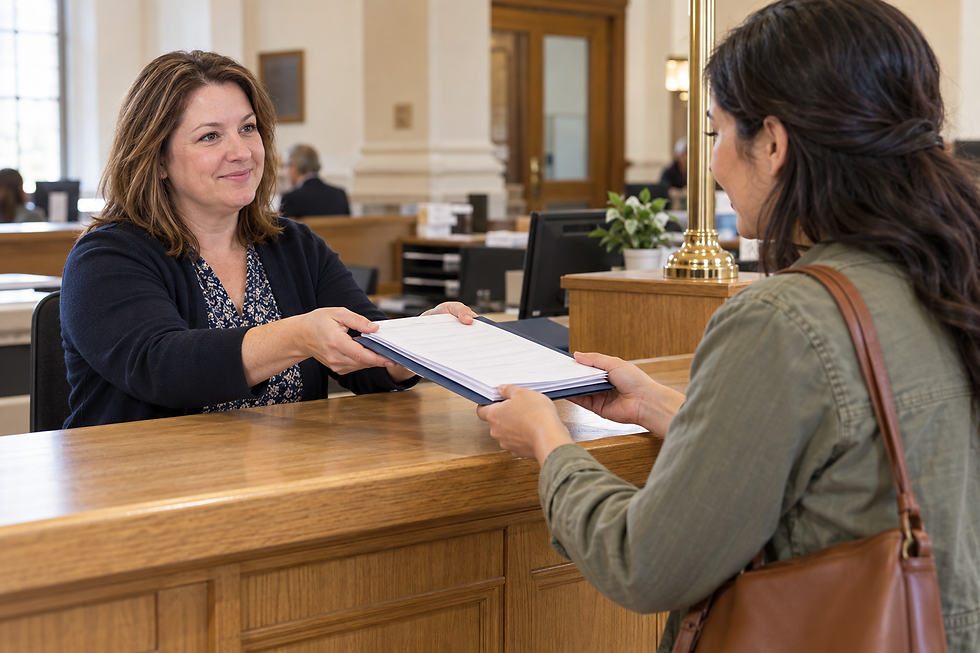
Depending on the location, the relevant office may be called the clerk of court, district clerk, or county clerk. Confirm that it handles your court’s filings. Staff can explain procedures and direct you to forms and self-help resources, but cannot decide your legal strategy or tell you how to win.
Have your case number, notices, and a short list of questions ready. Useful questions include:
Where are the current forms and filing instructions for this type of case?
What filing methods and fees apply, and is there a fee waiver process?
Where can I find the rules for serving papers and submitting proof of service?
What are this court’s instructions for exhibits and remote hearings?
Is there a self-help center, legal clinic, or interpreter request process?
Treat paperwork as part of the case
Read each notice fully. Record filing, response, service, and hearing dates in one place. Filing a document and properly notifying the other party are separate tasks; follow the rules for both. Keep copies of submissions and confirmations. Do not assume that a pending request changes an existing deadline.
If you are defending a claim, focus first on what response is required and when it is due. Waiting until the hearing to explain your side may be too late. When instructions conflict or a deadline is uncertain, seek help promptly.
Make the evidence easy to follow
Build a short timeline. Then match each important event to a document, photograph, message, or witness with firsthand knowledge. In the repair example, the payment receipt, agreed scope of work, and communications about completion might help explain the disagreement.
Keep original records and full conversations rather than relying only on isolated screenshots. Arrange proposed exhibits in a sensible order. Check your court’s rules for labeling, exchanging, and submitting them, including how recordings can be presented. Bringing material with you does not guarantee the judge will admit it.
Prepare any calculation of the amount requested or disputed. Confirm witness arrangements and the number of copies or electronic files required. Court guidance for small claims emphasizes preparing evidence and witnesses before the hearing, rather than improvising on the day.
Present facts with professionalism
Use a brief outline: what happened, what is disputed, which evidence supports your position, and what decision you are asking the court to make. Practice explaining it aloud in plain language. You do not need an elaborate speech.
Listen to the judge’s questions, answer directly, and allow others to finish speaking. Avoid personal attacks. If you do not know an answer, say so. Courtesy makes your presentation easier to follow; the law, evidence, and required procedures still determine the case.
Before you leave for court
Confirm the date, location, courtroom, or remote connection instructions.
Pack your notices, filed papers, outline, and organized exhibits.
Check that required service and exhibit submissions have been completed.
Allow time for travel, security, and finding the courtroom.
For a remote hearing, test your connection and choose a quiet space.
After the hearing, read the written order and note any next steps or deadlines.
Getting help can still leave you in control
Legal assistance is not always an all-or-nothing choice. Where available and appropriate, limited-scope representation lets a lawyer handle agreed parts of a matter while you handle others. A consultation or document review may help you understand your options. Confirm exactly what the lawyer will do and which responsibilities remain yours.
Preparation starts with manageable steps: find the right office, understand the instructions, organize the facts, and ask for help when you need it. Taking your problem seriously includes knowing when it is too important or too complicated to handle alone.
Official resources
These resources explain general preparation and available assistance. State-specific examples do not replace the rules of the court handling your case.


Comments